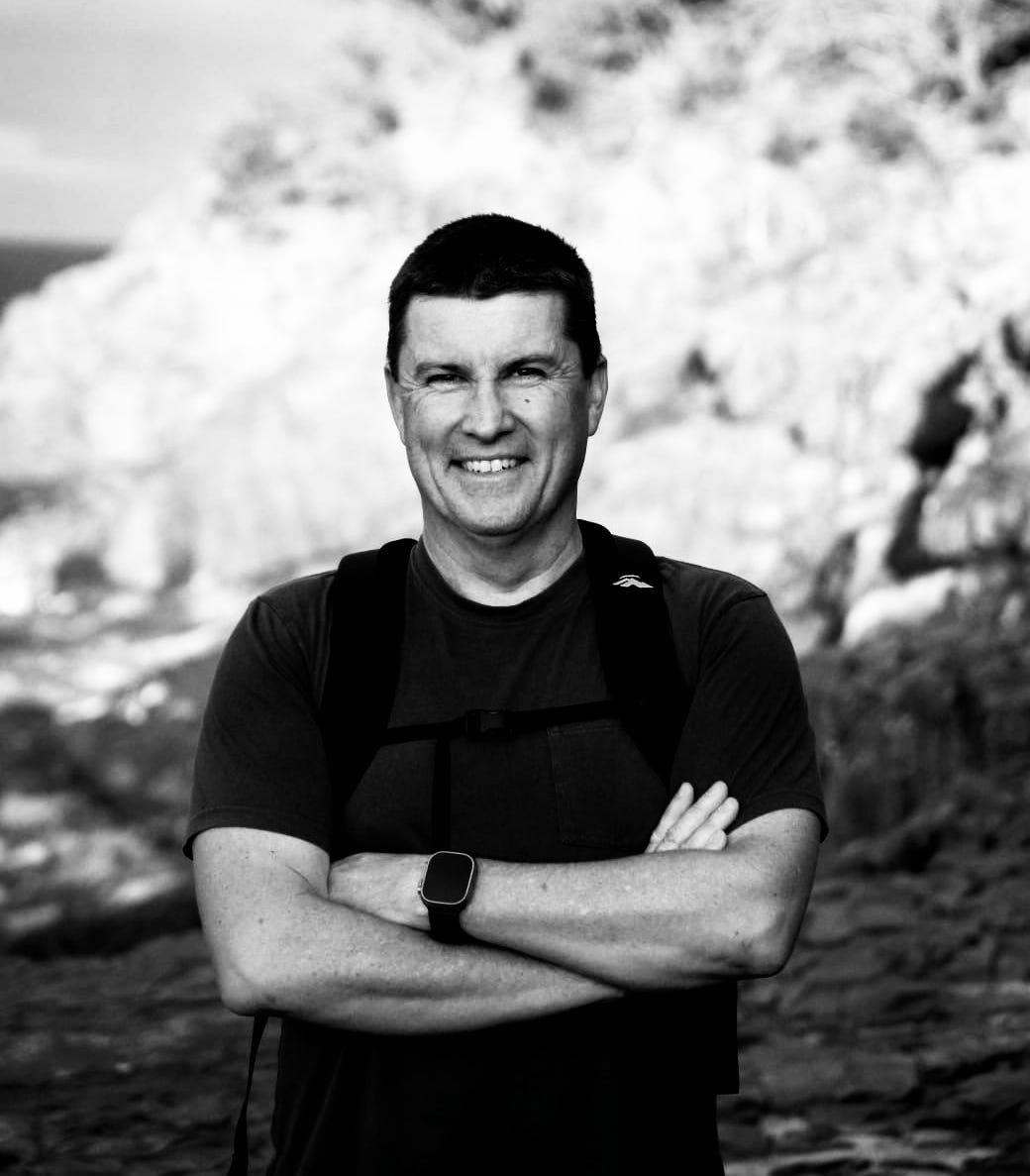
Meet Michael: Consultant Paediatric Dietitian
A passion for the complex in paediatrics
Photo by Etienne Girardet on Unsplash
…
A quick hello from me
…
First, what are my qualifications?
I am a registered Consultant Paediatric Dietitian (in Australia, we call this an Accredited Practicing Dietitian, or APD) and a clinical biochemist.
My degrees include a Bachelor of Medical Science from the Australian National University (ANU), and a Master’s Degree in Nutrition & Dietetics from the University of Sydney (USyd).
Throughout my career, I have also completed extensive training with some of the world’s best in multi-stakeholder facilitation, high-stakes group dialogue, the art of hosting and gathering, group coaching, and conflict resolution, through programs held at MIT, Harvard University, and elsewhere in the USA, Europe, Australia, Southeast Asia, and South America.
I have read hundreds of books related to groups and group facilitation and - perhaps most crucially - have trained alongside some of the best group facilitators, coaches and mentors in the world. As they say, it is in the trenches where the real learning happens and the most transformative development occurs.
…
…
My career, so far…
I have more than 30 years of experience. I started my career in paediatrics by working in large children’s hospitals – mostly in eating and feeding disorders, neurology, genetic and metabolic disorders.
My work in children’s hospitals was followed by an extensive period as a consultant, working across many wealthy and low-income countries, primarily addressing broken healthcare systems, chronic malnutrition, and diseases related to food and water insecurity, conflict and displacement. These issues are often set amongst complex forces of politics, money and cultural divisiveness. They are issues that I still feel strongly about today.
Over the most recent decade, as founder of The ARFID Clinic, I have been supporting some of the most severely disabled children with ARFID-ASD and complex neurodevelopmental disorders, all over Australia.
I also have a deep passion for the art of hosting meaningful gatherings across many types of very challenging contexts, which has involved working with people from dozens of cultures, countries and communities over the last few decades. It is also integral to my clinical work in facilitating a global network of Learning Labs, where complex specialist care is required in paediatrics, but often hard to access and unaffordable for many; more on that topic in other future posts.
…
Who do I work with in my clinic?
I work with parents of children who regularly eat fewer than ten foods. Nearly all the kids in my clinic never eat any fresh vegetables, legumes, fruits, seeds or nuts; they have nil, or almost nil, fresh plant foods in their diet. In fact, most also never eat fresh meat. They only eat processed meats, or none at all.
Their foods are almost always limited to a small range of ultra-processed foods (UPFs) that are high in calories and devoid of many essential vitamins, minerals, trace elements, prebiotic fibres, phytonutrients, and omega-3 fatty acids.
Technically speaking, the kids in my clinic have high severity Avoidant/Restrictive Food Intake Disorder (ARFID) that is caused by complex Autism (ASD L3) or other complex presentations of neuropsychiatric and neuroimmune disorders. They have a high level of disability. More than half cannot attend a mainstream kindergarten or school. About 30-40percent of the ARFID-ASD kids in my clinic require tube feeding through a gastrostomy device (such as a PEG device) in their stomach wall.
What seems poorly understood by clinicians is that ARFID on its own (as a single diagnosis) is very different to ARFID-ASD, or ARFID caused by complex neuropsychiatric disorders.
ARFID-ASD has an increased complexity of internal mechanisms, which demand different approaches. For example, in my clinic, none of the kids with severe ARFID-ASD has ever responded to ARFID-CBT, or ARFID Hypnotherapy, or SOS feeding therapy or any other type of food exposure therapy, regardless of the provider they are using, anywhere around Australia.
This confusion about ARFID-ASD creates many issues for parents trying to get help from their child’s physicians and allied health team. Much more on this in future newsletter articles.
However, ARFID-ASD, is just the starting point for kids in my clinic. At least one third of the kids in my clinic also present with a longer list of rare genetic, autoimmune and inflammatory disorders; complex illnesses that don’t fit any neat framework in the world of medicine.
It is even more complex when they appear as a supercluster; what I generally refer to as experiencing four or more complex disorders all at once. Their nutrition requirements are abnormal (dozens or hundreds of genetic variations that affect biochemistry pathways), highly complex to assess and diagnose, and hard to resolve.
In addition to ARFID-ASD, the superclusters typically present with ADHD, OCD, anxiety, depression, hypermobile Ehlers-Danlos Syndrome (hEDS), ME/CFS (chronic fatigue), PANS/PANDAS, Mast Cell Activation Syndrome, Long COVID (PASC), and a variety of duplication and triplication genetic disorders.
Of course, just like anywhere else in the broader community, some of these kids will also present with other common conditions like Irritable Bowel Syndrome (IBS), Coeliac Disease, Crohn’s Disease, insulin resistance, allergies, intolerances and other issues.
As you can probably tell, kids with ARFID-ASD who are living with a supercluster of other conditions make treatment very challenging, as it is extremely difficult to get anything new or different into them.
Treating a child with hEDS or insulin resistance or chronic constipation, is not the same as treating children with ARFID-ASD and those very same problems. It is profoundly more difficult. They need intensive, expert, ongoing help. But this level of expertise can be extremely difficult for parents to find. I hope the Nutrition Rescue newsletter provides part of the solution.
…
How do families find The ARFID Clinic and me?
Families usually find me after feeding therapy has failed (again), or parents have been told “they will grow out of it, or just keep presenting a few vegetables each night” (incredibly common advice, but seriously unhelpful), or there has been a regression in development, or health problems have worsened — constipation, anxiety, tics, stimming, dysautonomia symptoms, school refusal, fatigue, poor growth, chronic illness, aggression, suicidal ideation, or kids who simply can’t cope with daily life anymore.
Mostly, parents find me because other parents have provided a recommendation, or because they have a paediatrician somewhere in Australia who knows me well (or knows about my expertise).
Families in Australia who have NDIS budgets for a paediatric dietitian and want to make a New Patient Inquiry at my clinic, can visit here: The ARFID Clinic
…
What else happens in my life?
What happens outside of The ARFID Clinic, Nutrition Rescue, and all things ARFID-ASD?
Well, my world is busy with two teenagers and family life, a prolific garden (we live in a humid climate), and a daily fitness routine— a mixture of swimming, trail running, and regular workouts that combine Animal Flow and Vipr Pro exercises (if you are curious, you can look that up!).
I love immersing myself in nature and the great outdoors. I am fortunate to be surrounded by forests, rivers, lakes, beaches and many national parks for longboard surfing, trail running and camping.
And…, I am a little bit obsessed with fine furniture making. I design and make furniture in a friend’s workshop, we occasionally mill wood together from fallen trees, and we volunteer at a community woodworking club.
I look forward to many conversations ahead with you all.
Michael